中科院考博英语真题特点分析
中科院的博士英语入学考试在国内科研院所中以其高难度和鲜明特点而著称,它不仅仅是一个语言水平测试,更侧重于考察考生运用英语进行学术研究和交流的潜力,其核心特点可以概括为以下几点:
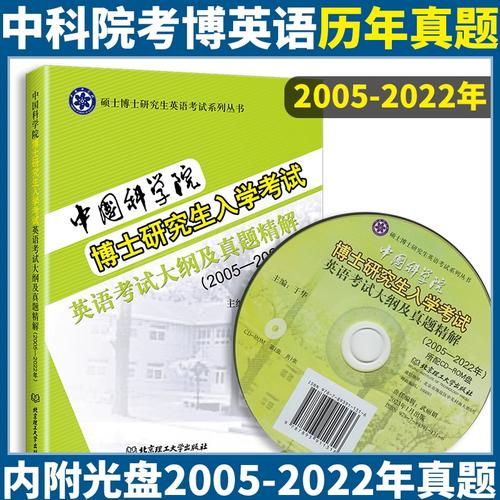
难度大,要求高
- 词汇量要求高: 词汇量要求远超普通六级或考研英语水平,通常需要掌握8000-10000以上的词汇,其中包含大量学术词汇、专业术语和生僻词。
- 文章体裁学术化: 阅读理解、完形填空等部分的材料均选自《经济学人》、《科学》、《自然》、《科学美国人》等顶尖英文学术期刊或外刊,话题涉及科技、生物、环境、心理、社会等前沿领域,句子结构复杂,逻辑严谨。
- 题型设计刁钻: 题目设置不仅考察信息获取,更侧重于对文章主旨、作者态度、逻辑推理和深层含义的理解,干扰项具有很强的迷惑性。
题型稳定,重点突出 中科院考博英语的题型结构相对固定,主要包括以下几个部分:
| 题型 | 题量/分值 | 主要特点与考察重点 |
|---|---|---|
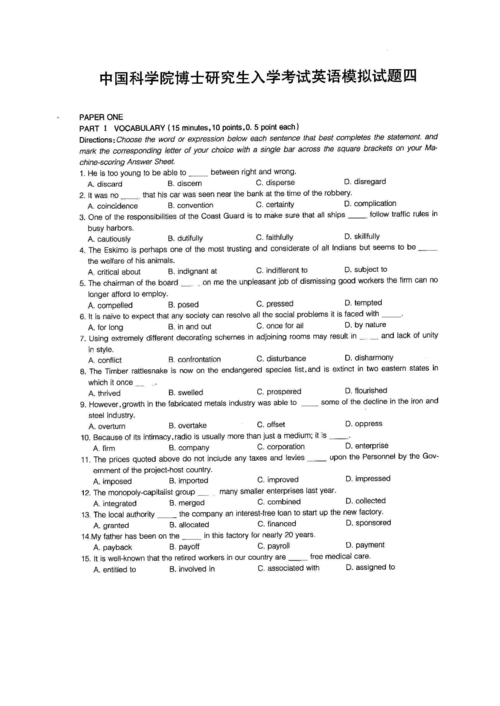
| 词汇与语法结构 | 约20-30题 | 核心难点,考察词汇在语境中的精确含义(尤其是熟词僻义)、固定搭配、以及复杂的语法结构(如倒装、虚拟语气、非谓语动词、从句嵌套等)。 |
| 阅读理解 | 4-5篇文章,每篇5题,共20-25题 | 绝对重点,文章长、难、学术化,题目类型多样,包括细节题、主旨题、推理题、词义题、态度题等,要求快速阅读、精确定位和深度理解。 |
| 完形填空 | 1篇文章,20个空 | 综合能力考察,文章通常学术性强,空格设置灵活,不仅考察词汇和语法,更考察对全文逻辑、上下文语义连贯性和篇章结构的把握。 |
| 翻译 | 1-2个段落(英译汉) | 实践能力考察,选材多为科普或社科类学术性段落,句子结构复杂,包含长难句、被动语态和抽象概念,要求翻译准确、通顺、专业。 |
| 写作 | 一篇(通常为议论文) | 逻辑与表达能力考察,题目多为社会热点或与科研相关的思辨性话题(如科技伦理、学术诚信、科研方法等),要求观点明确、论证充分、结构清晰、语言地道。 |
侧重学术与应用能力 考试的核心目的是确保考生能够无障碍地阅读英文文献、撰写英文论文摘要、参加国际学术会议,所有题型都服务于这一最终目标,翻译和写作部分直接模拟了学术场景下的语言应用。
备考策略与建议
针对中科院考博英语的上述特点,备考需要有针对性地进行。
词汇:攻坚克难,学以致用
- 核心词汇书: 选择一本权威的词汇书(如《GRE词汇精选》、《中科院考博英语词汇》等),但不要孤立地背单词。
- 语境记忆法: 将单词放到阅读文章中去记忆,理解其搭配和用法,准备一个生词本,记录阅读中遇到的生僻词、熟词僻义和学术词汇。
- 词根词缀法: 掌握常见的词根词缀,有助于高效猜测和记忆单词。
- 主题分类: 将科技、生物、环境等高频主题的词汇进行归纳整理。
阅读:精读与泛读结合,提升语感
- 精读材料: 以《经济学人》、《科学》、《自然》为精读材料,每周精读2-3篇文章,做到:
- 彻底搞懂每一个单词和句子结构。
- 分析文章的篇章结构、段落逻辑和作者观点。
- 学习地道的表达方式和学术写作风格。
- 泛读材料: 阅读其他外刊(如《纽约时报》、《卫报》、《新科学家》),拓宽知识面,提高阅读速度。
- 刷真题: 历年真题是最好的复习资料,反复研究真题,分析出题规律和错误选项的设置陷阱。
语法与完形:回归基础,把握全局
- 语法梳理: 找一本经典的语法书(如《薄冰英语语法》),系统复习一遍,特别是长难句分析、从句、非谓语动词等难点。
- 完形专项训练: 做完形填空时,先通读全文把握大意,然后逐空分析,最后再通读一遍检查,重点关注上下文的逻辑关系词(如however, therefore, in contrast)。
翻译:拆解长难,锤炼表达

- 练习材料: 直接翻译中科院历年真题的翻译部分,或者选择《科学美国人》等刊物上的科普文章进行练习。
- 翻译步骤:
- 理解: 仔细阅读,拆分长难句,理清句子主干和修饰成分。
- 表达: 用准确、通顺的中文进行转述,避免“翻译腔”。
- 校对: 检查译文是否忠实于原文,有无错译、漏译,语言是否流畅。
- 积累: 积累常用学术概念的固定译法。
写作:构建框架,积累素材
- 学习范文: 分析高分范文的结构(如引言-主体-、论证方法和常用句型。
- 构建模板: 准备一个属于自己的、灵活的写作模板,但切忌生搬硬套。
- 练习与批改: 每周至少写一篇作文,可以请英语好的同学或老师帮忙批改,重点检查逻辑、语法和用词。
- 积累观点和素材: 针对科技、教育、社会等常见话题,积累自己的观点和论据。
模拟真题示例(参考风格)
以下是一套根据中科院考博英语风格编写的模拟题,供你体验。
Part II Reading Comprehension (25 points)
Directions: There are four passages in this part. Each passage is followed by some questions or unfinished statements. For each of them there are four choices marked A, B, C and D. You should decide on the best choice and mark the corresponding letter on the Answer Sheet with a single line through the center.
Passage One
The concept of "free will," the idea that humans are the authors of their own actions and thus morally responsible for them, has long been a cornerstone of Western philosophy and legal systems. However, a growing body of research in neuroscience is challenging this foundational belief. By using advanced brain imaging techniques like fMRI, scientists can now observe brain activity that precedes a person's conscious awareness of having made a decision. In a landmark study, Benjamin Libet and his colleagues found that a brain signal called the "readiness potential" could be detected up to several seconds before a subject reported feeling the conscious intention to move a finger. This "neurodeterminist" interpretation suggests that our conscious minds may be more like a spectator, observing decisions that have already been made by unconscious brain processes, rather than the commander-in-chief initiating them.
Critics of this view argue that Libet's experiments are too simplistic. They point out that the decisions in the lab were trivial—wiggling a finger—and may not be comparable to the complex, deliberative choices that define our lives, such as choosing a career or a partner. Furthermore, neuroscience has also revealed that the brain possesses a remarkable capacity for "re-evaluation" and "cognitive control." Even if an initial impulse arises, our prefrontal cortex can intervene, inhibit that impulse, and guide us toward a different course of action. This suggests that while our conscious experience might lag behind initial brain activity, it still plays a crucial role in modulating our behavior.
The debate over free will is not merely an academic exercise; it has profound implications. If we are truly not in control of our actions, the very basis of our criminal justice system, which relies on the principle of individual responsibility, could be called into question. It would challenge notions of praise and blame, reward and punishment. Conversely, if we can demonstrate that our brains are wired in a way that allows for genuine agency, it reinforces the importance of fostering environments that encourage rational thought and moral development. The ultimate resolution, if one exists, may lie not in a simple "yes" or "no," but in a more nuanced understanding of the intricate interplay between our biology and our sense of self.
According to the passage, the "readiness potential" is a signal that __. A. is consciously perceived by the subject before a decision B. can be detected by scientists before a conscious decision is made C. proves that conscious decisions are initiated by the prefrontal cortex D. only appears during complex, deliberative decision-making
What is the main argument of the critics mentioned in Paragraph 2? A. Neuroscience should not be used to inform legal philosophy. B. Libet's experiments are too complex to be interpreted accurately. C. The brain's cognitive control undermines the neurodeterminist view. D. Laboratory findings on simple actions cannot be generalized to complex life choices.
The author suggests that the debate over free will is significant because __. A. it questions the validity of our moral and legal systems B. it determines whether humans are biologically different from animals C. it is the most important unresolved question in neuroscience D. it has no practical implications beyond academic circles
What can be inferred from the passage about the author's view on free will? A. The author firmly believes in the existence of free will. B. The author is a strict neurodeterminist who denies all forms of agency. C. The author believes the answer is likely to be a complex compromise. D. The author thinks the debate is futile and should be abandoned.
如何获取历年真题
获取最权威的历年真题是备考的第一步,你可以通过以下途径:
- 中科院研究生院官网: 有时会发布部分年份的考试大纲或样题。
- 淘宝、闲鱼等电商平台: 搜索“中科院考博英语真题”,有往届考生出售的历年真题合集,这是最直接的方式,购买时注意评价和销量。
- 考研论坛/社区: 如“小木虫”、“考研帮”等,上面有很多考生分享的经验和回忆版真题。
- 学长学姐: 如果能联系到在中科院就读的师兄师姐,他们那里可能有最宝贵的资料。
提醒一句: 备考中科院考博英语是一个漫长且艰苦的过程,需要持之以恒的努力,祝你备考顺利,成功上岸!